
- Features
-
Key Features
- SPI master interface with configurable phase(CPHA), polarity(CPOL) and frequency (up to 48MHz);
- SPI slave interface with frequency up to 48MHz, configurable phase(CPHA) and polarity(CPOL);
- SPI Flash interface
- I2C master interface with configurable frequency (up to 1MHz);
- I2C slave interface with supported frequency up to 1MHz;
- UART interface;
- 48 digital I/O pins with debounce filter, open drain functionality and embedded pull-up resistors;
- 8 analog inputs with event-driven interface;
- 4 PWM outputs with configurable frequency and duty cycle;
- 3 Pulse and frequency counters with event-driven interface;
- 1 status LED and 2 user-configurable LED's;
- no hidden fees: API, updates, software and technical support are free;
- USB 2.0 high-speed (480 MHz) interface with Plug-and-Play detection and notification;
- RoHS Compliant
Event-Driven Interface
The DLN-4S host adapter supports an event-driven interface for digital and analog inputs, pulse counters, I2C and SPI slave modules and a UART.
Let’s see an example of how an event-driven interface for an SPI slave module can be used in your application.
According to the SPI bus specification, the data transmission can be only initialized by an SPI master device. In general, you don’t know when that occurs. Without an event-driven interface your application would need to periodically poll the adapter to check if some data is sent by the SPI bus master. Such a polling process wastes computer resources and USB bandwidth.
You can configure the SPI slave module of the DLN-4S host adapter for an event-driven interface. When an external SPI master transmits some data, the DLN-4S host adapter creates an event and notifies your application. This event contains the data sent by the SPI bus master. Your application can process the data and continue its regular execution.
In full-duplex mode, you can also send the data for the next transfer while processing an event.
- Specifications
-
Electrical Characteristics
Absolute Maximum Ratings:
Parameter Min Max Storage Temperature -60°C +150°C Ambient Temperature Under Bias -40°C +85°C DC Input Voltage to Any Pin -0.3V +4.0V Operating Conditions:
Parameter Min Max Ta (Ambient Temperature Under Bias) 0°C +70°C DC Current VCC and GND Pins 50mA GPIO Characteristics:
Symbol Parameter Condition Min Max VIH Input High Voltage 2.31V 3.6V VIL Input Low Voltage -0.3V 0.99V VOH Output High Voltage IOUT= 2.0mA 2.9V VOL Output Low Voltage IOUT= -2.0mA 0.4V IL Input Leakage Current I/O Pin 0.001mA IDC DC Current per I/O Pin 3.0V<VDDIO<3.6V; VOH=2.2V 9mA SPI Interface Characteristics:
Symbol Parameter Condition Min Max VIH Input High Voltage 2.31V 3.6V VIL Input Low Voltage -0.3V 0.99V VOH Output High Voltage IOUT= 2.0mA 2.9V VOL Output Low Voltage IOUT= -2.0mA 0.4V Freq SPI Bus Frequency configurable 376 kHz 48 MHz I2C Interface Charachteristics:
Symbol Parameter Condition Min Max VIH Input High Voltage 2.31V 3.6V VIL Input Low Voltage -0.3V 0.99V VOHi Output High Voltage Internal VCC 2.9V VOHe Output High Voltage External VCC (VCC-0.4)V VOL Output Low Voltage 0.4V Freq I2C Bus Frequency configurable 1470 Hz 400 kHz * - Documentation and Downloads
-
Documentation & Online Support
Development
Title Links Description C/C++ API 
C/C++ API desription. .NET API 
API description for .NET development. LabView Instrument Driver DLN LabView Driver is included in MS Windows dln.3.4.0.exe[zip] setup package Hardware Information
Title Links Description Chip datasheet ATSAM3U4C chip datasheet. Chip pinout DLN-4SC chip pinout. Connectors and Jumpers Port and pins assignment on available connectors and jumpers description. Schematics Board schematics. Mechanical Drawing Board mechanical drawing. Software
Title Links Description MS Windows Setup Package 

Contains driver, API libraries, binaries and software examples source code to use DLN adapter in MS Windows OS. Linux Setup Package Contains all required files to start using DLN adapter in Linux. Firmware Update Latest firmware update for DLN adapter. Firmware can be downgraded with this application also. - Reviews
-
Accessories
-
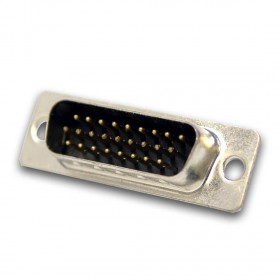
DB-26 Connector
$4.90 -
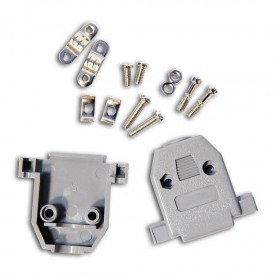
HOOD-26 HOOD for DB26 connector
$5.60 -
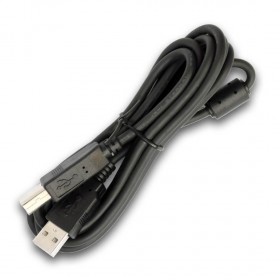
USB-CABLE-1 USB A/B Cable 6 feet
$4.90 -
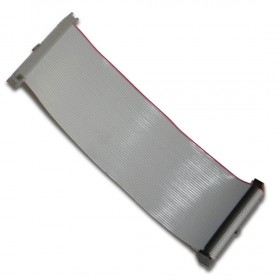
IDC-40-14FF 2x20 Flat Cable, 14 cm, female-female
$8.10 -
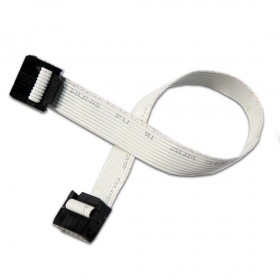
IDC-10-20FF 2x5 Flat Cable, 20 cm, female-femail
$5.90 -
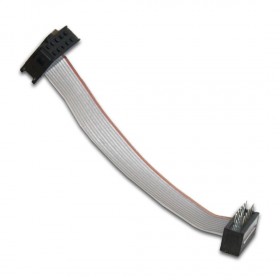
IDC-10-7FM 2x5 Flat Cable, 7 cm, female-male
$5.70 -
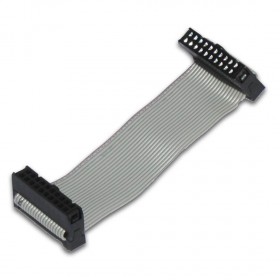
IDC-20-8FF 20 Pin Flat Cable, 15 cm, female-female
$5.20